Chicken Pesto Pasta – Bright, Savory, and Weeknight-Friendly
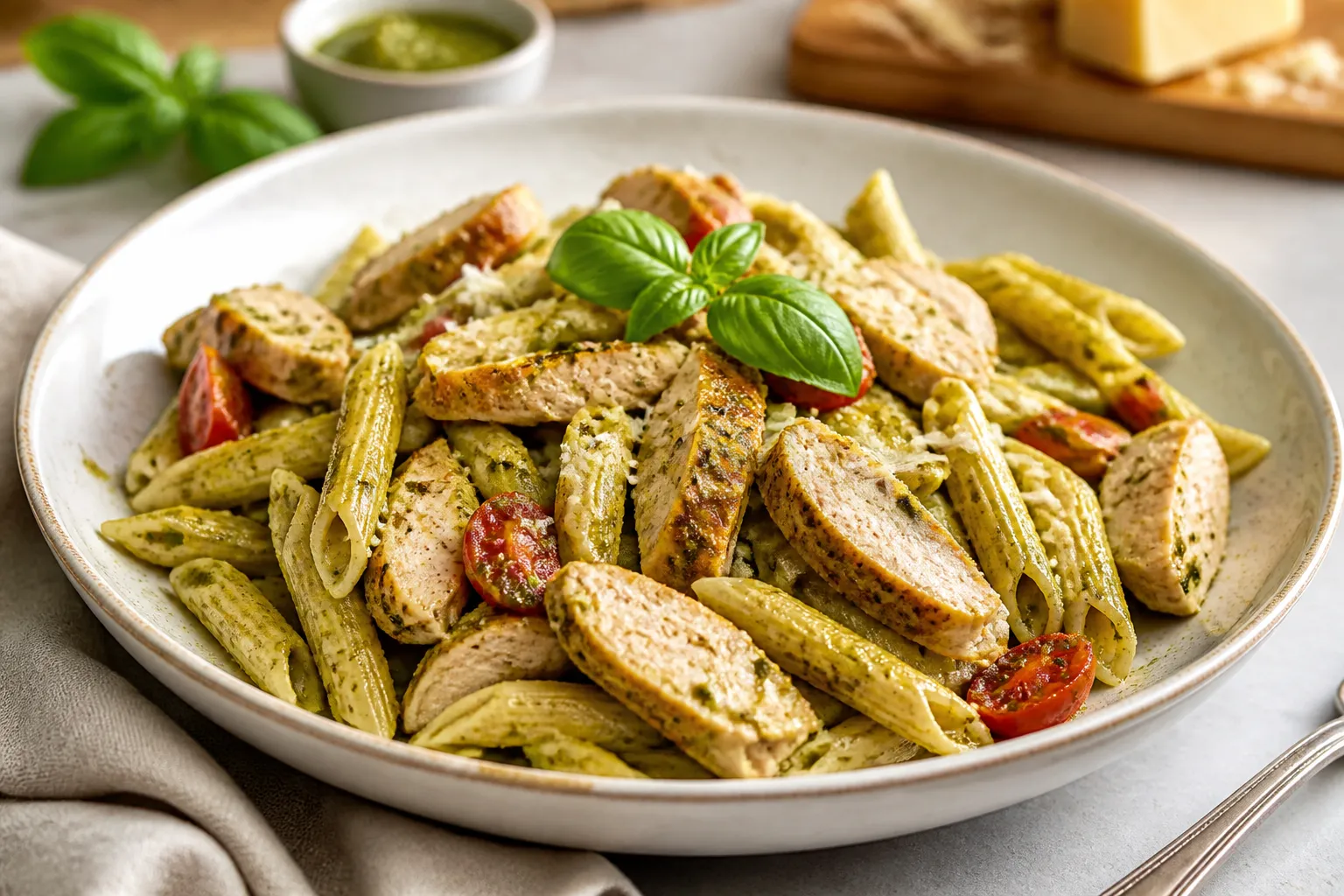
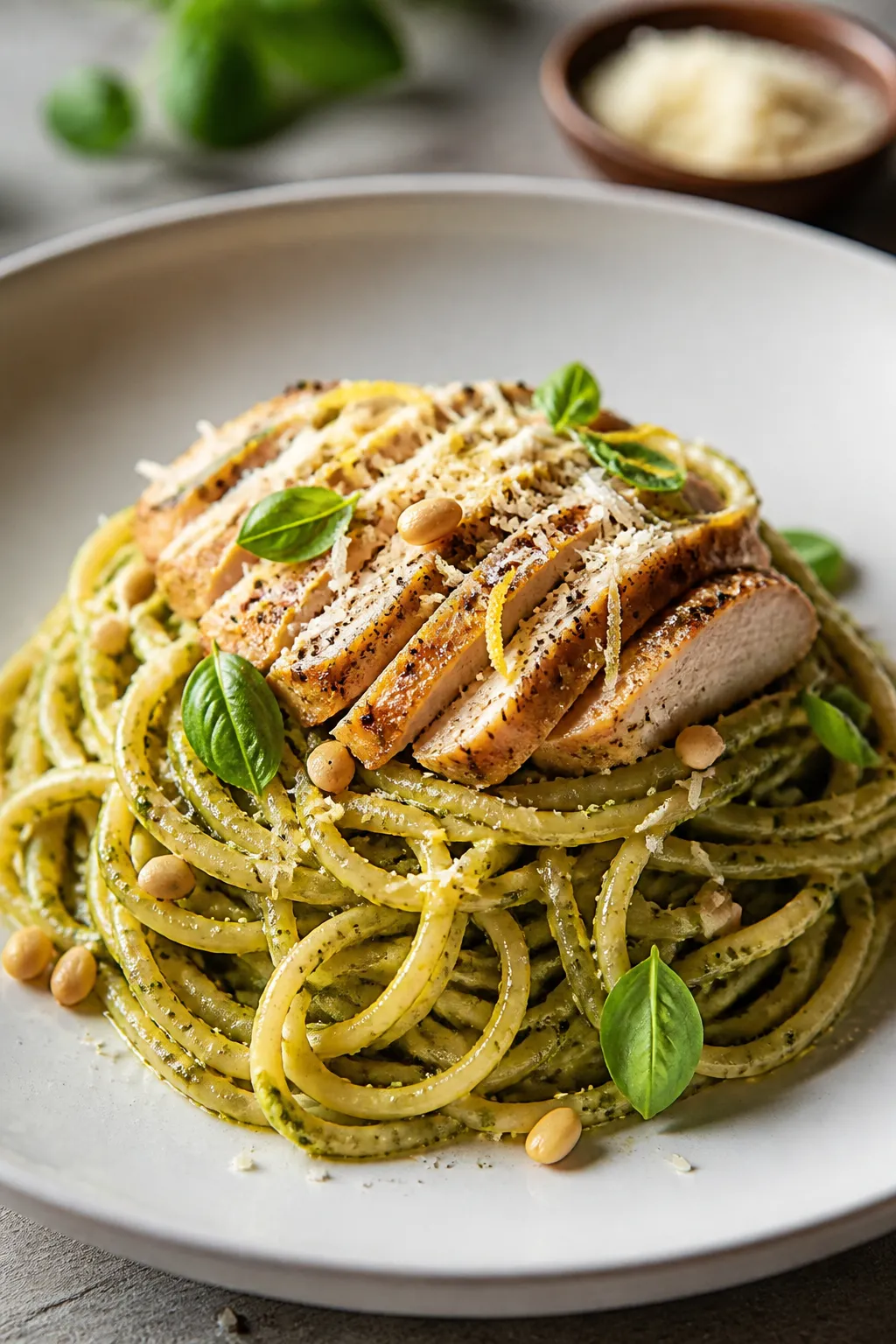
Chicken pesto pasta brings big flavor with minimal effort. It’s the kind of dish you can pull together after work and still feel like you made something special. Juicy chicken, tender pasta, and a glossy basil pesto come together in one pan with a few pantry staples.
Your Next 7 Dinners Are Already Planned
Get seven straightforward dinner recipes, one combined grocery list, and practical prep tips—all in one free guide.
The scent alone—garlic, basil, toasted pine nuts—makes the kitchen feel warm and inviting. If you love comforting food that doesn’t weigh you down, this one hits the mark.
Ingredients
Method
- Salt the water well. Bring a large pot of water to a rolling boil. Add enough salt so it tastes like the sea. This is your first chance to season the pasta and the final dish.
- Cook the pasta. Add the pasta and cook until just shy of al dente. Reserve 1 cup of the starchy cooking water, then drain. Toss the pasta with a drizzle of olive oil so it doesn’t clump.
- Prep the chicken. Pat the chicken dry and season it with 1 teaspoon salt, 1/2 teaspoon black pepper, and a pinch of red pepper flakes if you like heat.
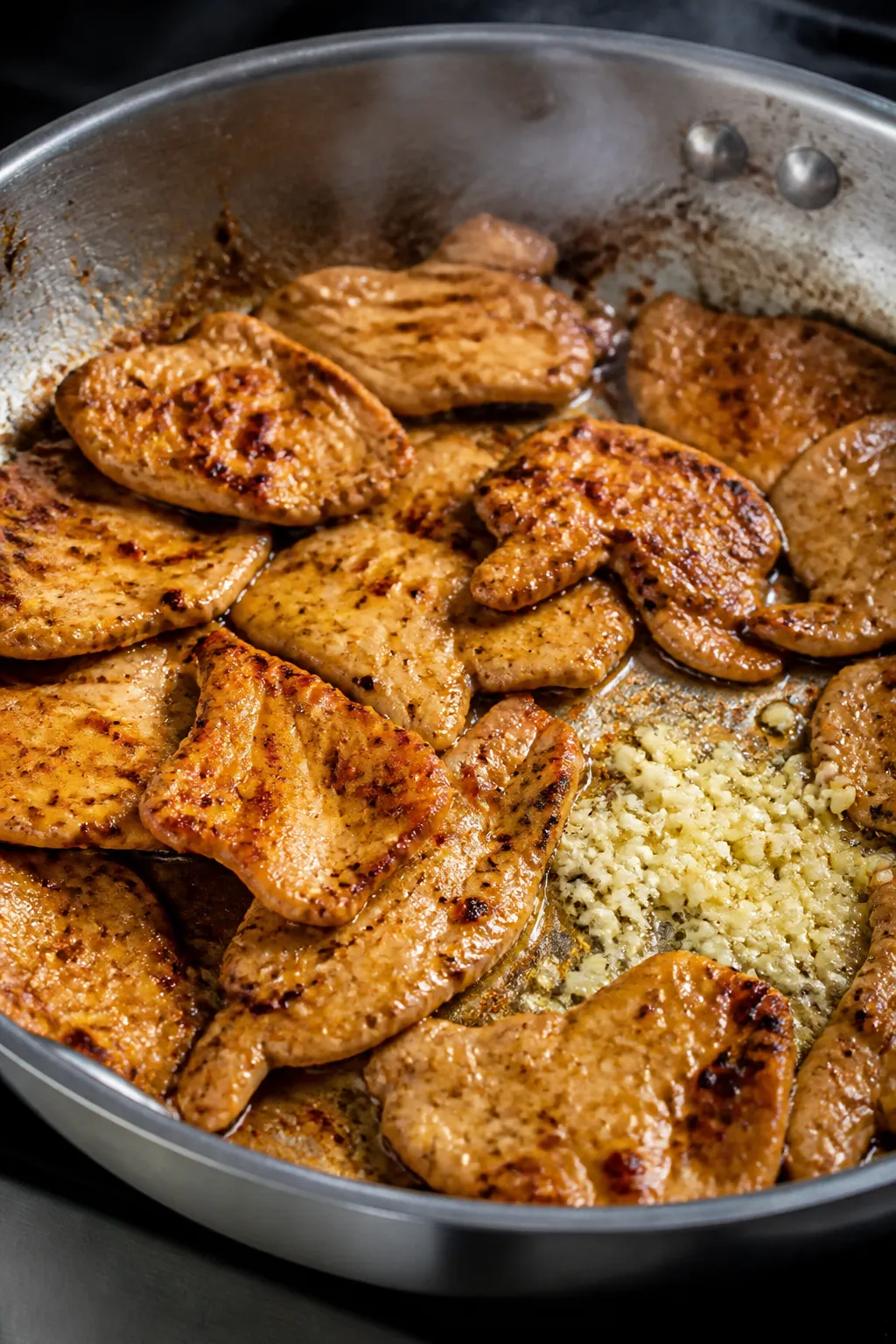
- Sear the chicken. Heat 2 tablespoons olive oil in a large skillet over medium-high. Add the chicken in a single layer. Cook 3 to 5 minutes per side until golden and cooked through. Transfer to a plate and rest for a couple of minutes, then slice or cube if needed.
- Build flavor in the pan. Lower the heat to medium. If the pan is dry, add a splash of olive oil. Add the minced garlic and sauté for 30 seconds until fragrant. Don’t let it burn.
- Loosen with pasta water. Pour in 1/3 to 1/2 cup reserved pasta water to cool the pan slightly. Add the cooked pasta and toss to coat, letting the starch create a light base for the sauce.
- Add the pesto. Off the heat or on very low, stir in the pesto. Toss until the pasta is glossy and evenly coated. Add more pasta water, a splash at a time, until it’s silky and moves easily in the pan.
- Fold in the chicken and extras. Add the chicken back to the skillet. Stir in lemon zest and juice. If using cherry tomatoes or greens, add them now. The residual heat will soften the greens and warm the tomatoes.
- Finish with cheese. Sprinkle in the Parmesan and toss again. Taste and adjust salt, pepper, and lemon juice. The sauce should be bright, savory, and smooth—not thick or clumpy.
- Serve and garnish. Plate the pasta. Top with more Parmesan and toasted nuts for crunch. Add a few basil leaves if you have them.
What Makes This Special
This dish is all about balance: rich olive oil, fresh basil, bright lemon, and a touch of creaminess from the cheese. You get satisfying protein from the chicken and a pile of herbs that keeps each bite lively.
It’s also flexible. Swap the pasta shape, change the greens, or use store-bought pesto on busy nights. Best of all, it cooks fast, and the leftovers taste even better the next day.
What You’ll Need
- Pasta: 12 ounces short pasta (penne, fusilli, or rotini) or long pasta like spaghetti
- Chicken: 1 to 1.25 pounds boneless, skinless chicken breasts or thighs, thinly sliced
- Pesto: 3/4 to 1 cup basil pesto (homemade or store-bought)
- Olive oil: 2 tablespoons, plus more if needed
- Garlic: 2 to 3 cloves, minced
- Lemon: Zest of 1 lemon and 1 to 2 teaspoons juice
- Parmesan: 1/2 cup finely grated, plus more for serving
- Cherry tomatoes (optional): 1 cup, halved
- Baby spinach or arugula (optional): 2 cups
- Red pepper flakes (optional): A pinch, for heat
- Salt and black pepper: To taste
- Pasta water: Reserve 1 cup for the sauce
- Pine nuts or walnuts (optional): 2 tablespoons, toasted, for garnish
How to Make It
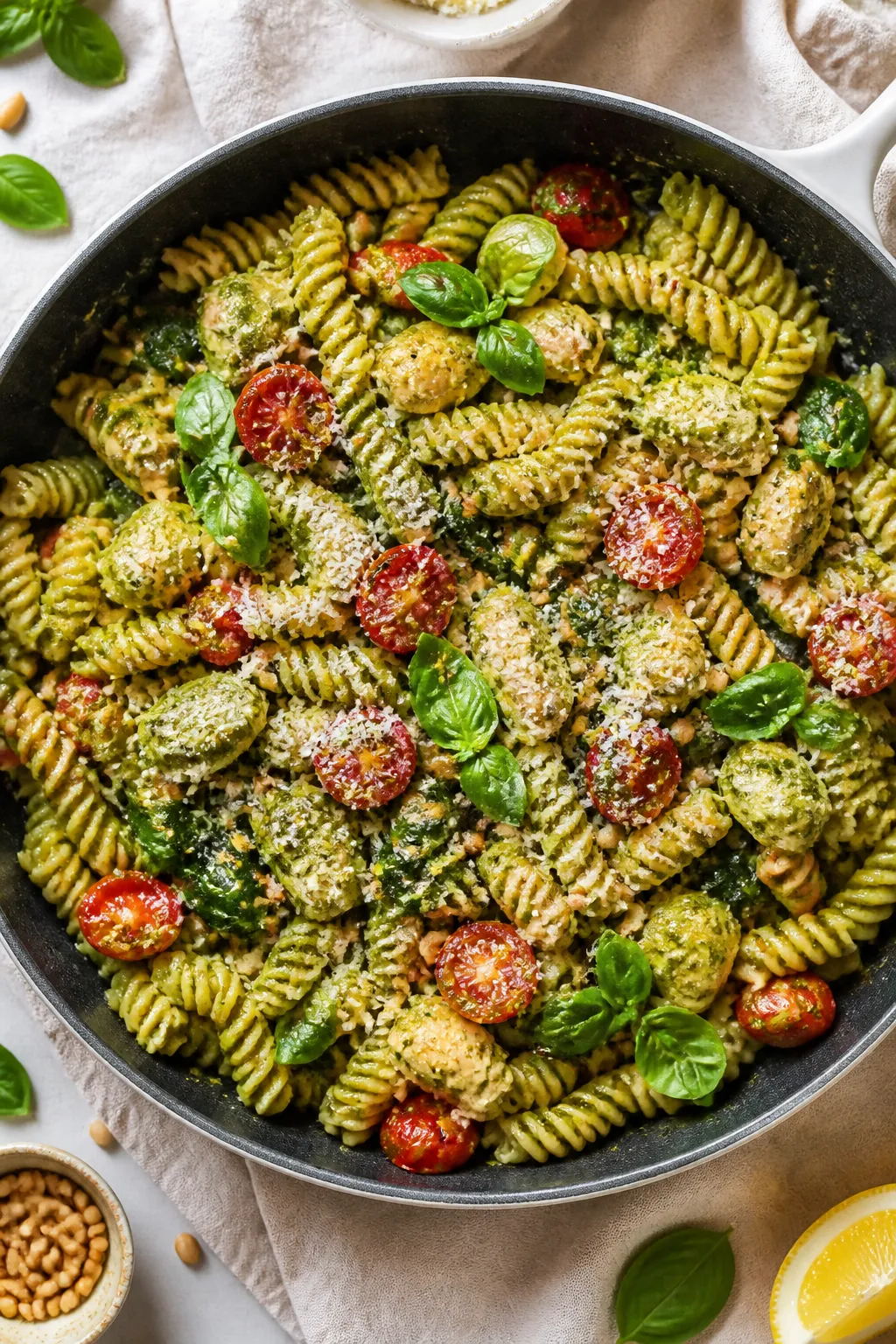
- Salt the water well. Bring a large pot of water to a rolling boil.
Add enough salt so it tastes like the sea. This is your first chance to season the pasta and the final dish.
- Cook the pasta. Add the pasta and cook until just shy of al dente. Reserve 1 cup of the starchy cooking water, then drain.
Toss the pasta with a drizzle of olive oil so it doesn’t clump.
- Prep the chicken. Pat the chicken dry and season it with 1 teaspoon salt, 1/2 teaspoon black pepper, and a pinch of red pepper flakes if you like heat.
- Sear the chicken. Heat 2 tablespoons olive oil in a large skillet over medium-high. Add the chicken in a single layer. Cook 3 to 5 minutes per side until golden and cooked through.
Transfer to a plate and rest for a couple of minutes, then slice or cube if needed.
- Build flavor in the pan. Lower the heat to medium. If the pan is dry, add a splash of olive oil. Add the minced garlic and sauté for 30 seconds until fragrant.
Don’t let it burn.
- Loosen with pasta water. Pour in 1/3 to 1/2 cup reserved pasta water to cool the pan slightly. Add the cooked pasta and toss to coat, letting the starch create a light base for the sauce.
- Add the pesto. Off the heat or on very low, stir in the pesto. Toss until the pasta is glossy and evenly coated.
Add more pasta water, a splash at a time, until it’s silky and moves easily in the pan.
- Fold in the chicken and extras. Add the chicken back to the skillet. Stir in lemon zest and juice. If using cherry tomatoes or greens, add them now.
The residual heat will soften the greens and warm the tomatoes.
- Finish with cheese. Sprinkle in the Parmesan and toss again. Taste and adjust salt, pepper, and lemon juice. The sauce should be bright, savory, and smooth—not thick or clumpy.
- Serve and garnish. Plate the pasta.
Top with more Parmesan and toasted nuts for crunch. Add a few basil leaves if you have them.
Keeping It Fresh
Pesto tastes best when it’s protected from air and heat. If you’re making your own, press plastic wrap directly on the surface or add a thin layer of olive oil before chilling.
Cooked chicken pesto pasta keeps well in an airtight container in the fridge for 3 to 4 days. Reheat gently with a splash of water or olive oil to loosen the sauce. For meal prep, store the pasta and pesto separately if possible and combine when reheating for the brightest flavor.
Why This is Good for You
- Lean protein: Chicken provides essential amino acids to keep you full and support muscle health.
- Heart-healthy fats: Olive oil and nuts in the pesto offer monounsaturated fats that support heart health.
- Herbs and greens: Basil and spinach bring vitamins A and K along with antioxidants.
- Smart carbs: Pasta offers steady energy.
Choose whole wheat or chickpea pasta if you want more fiber and protein.
- Balanced plate: Protein, carbs, and fats come together for a satisfying, well-rounded meal.
What Not to Do
- Don’t boil the pesto. High heat dulls the basil and can turn the sauce bitter. Add pesto off the heat or on low.
- Don’t skip pasta water. It emulsifies the sauce, helping it cling to the pasta without getting greasy.
- Don’t overcrowd the chicken. Cook in batches if needed so it browns instead of steaming.
- Don’t overcook the pasta. Slightly under al dente is perfect since it will finish in the pan.
- Don’t forget acid and salt. A touch of lemon and a final pinch of salt make the flavors pop.
Recipe Variations
- Creamy pesto pasta: Stir in 1/4 cup heavy cream or a spoonful of ricotta for a lush, velvety sauce.
- Veggie boost: Add sautéed zucchini, roasted broccoli, or blistered asparagus for extra color and texture.
- Nut swap: Use walnuts, almonds, or pistachios in place of pine nuts for a different spin.
- Dairy-free: Use a dairy-free pesto and swap Parmesan with nutritional yeast. Finish with extra lemon.
- Grilled chicken version: Grill marinated chicken breasts, slice thin, and toss with the pasta for a smoky note.
- Protein twist: Try shrimp, salmon, or white beans instead of chicken for variety.
- Spicy kick: Add Calabrian chili paste or more red pepper flakes to heat things up.
- Gluten-free: Use your favorite gluten-free pasta and check that your pesto is gluten-free.
FAQ
Take the Guesswork Out of Dinner This Week
The free 7-Day Easy Dinner Reset gives you seven satisfying recipes, a ready-to-use grocery list, and simple prep guidance to make your week easier.
Can I use store-bought pesto?
Yes.
A good-quality jar works well, especially on busy nights. Taste it first and adjust with extra lemon, olive oil, or Parmesan to brighten the flavor.
How do I keep the sauce from getting oily?
Use pasta water to emulsify the pesto instead of adding more oil. Toss over low heat and add Parmesan gradually so it melts smoothly.
Avoid overheating the pesto.
What pasta shape works best?
Short, ridged shapes like fusilli or penne catch the sauce nicely. Spaghetti or linguine also work. Choose what you enjoy and cook it just shy of al dente.
Can I make it ahead?
You can cook the chicken and pasta ahead, then toss with pesto when reheating.
Add a splash of pasta water or broth to revive the sauce. For the freshest taste, keep pesto separate until serving.
How can I make it lighter?
Use whole wheat or chickpea pasta, reduce the cheese slightly, and add extra greens. You can also use grilled chicken breast and a smaller amount of pesto, balancing with lemon and pasta water.
What if my pesto tastes bitter?
Bitterness can come from over-blending or old olive oil.
Fix it by adding a pinch of salt, a squeeze of lemon, and a little more Parmesan. A small splash of pasta water can also help round the flavors.
Is rotisserie chicken okay?
Absolutely. Shred it and warm it gently in the pan with pasta water before adding pesto.
It’s a fast, flavorful shortcut.
Can I freeze it?
Freeze pesto by itself in small containers or ice cube trays. Cooked pasta with pesto doesn’t freeze well—it can turn mushy and dull in flavor.
In Conclusion
Chicken pesto pasta is a simple, crowd-pleasing meal with big payoff. With a few smart steps—good seasoning, gentle heat, and a splash of pasta water—you get a silky, vibrant sauce that clings to every bite.
Keep it classic, or add your favorite veggies and spices. Either way, it’s a weeknight staple that feels restaurant-worthy without the fuss.
Before You Plan Another Dinner…
Grab the free guide that gives you seven easy dinners, one combined grocery list, and useful prep tips for a smoother week.